Source Auto Engine Mounts for Toyota, Truck, and Car Applications
Find 30 auto engine mount options from Chinese suppliers. Compare specifications for steel and iron materials, ISO certifications, and OEM compatibility. Evaluate pricing, MOQs, and delivery times to select the right shock-absorbing components for your vehicle needs; compare the available evidence and request quotations based on your requirements.
Key considerations
Products List





Comprehensive Sourcing Guide
Auto Engine Mount Sourcing Guide
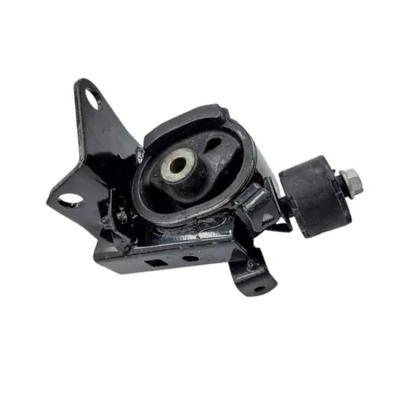
Procuring auto engine mounts requires distinguishing between specific vibration-dampening components and general structural brackets often listed under similar keywords. The observed product data reveals a mix of items, including shock absorbers and various brackets, alongside genuine engine mounts identified by specific model numbers like NJAP001 and KKB500740. Buyers must carefully filter listings to ensure the component matches the vehicle's specific mounting requirements rather than generic suspension parts.
Verification of the core material composition is critical, as the supply data indicates options ranging from iron to aluminum bodies with EPDM shock-reducing rubber. These material choices directly influence the mount's ability to isolate engine vibrations while maintaining structural integrity under thermal stress. Sourcing strategies should prioritize suppliers who explicitly define the rubber compound and metal alloy to ensure compatibility with the intended automotive application.
Product Scope and Observed Listing Signals
The market listing signals for auto engine mounts often include overlapping categories such as shock absorbers and structural brackets, necessitating a rigorous review of the product type field. While some entries specify "Engine Mounts" or "Shock Absorber" types, others list generic attributes like "Triangle Bracket" or "Casting Box Type" which may not serve the primary function of engine isolation. Buyers should scrutinize the "Type" and "Usage" fields to confirm the item is designed specifically for engine mounting rather than auxiliary support.
Observed listing attributes indicate a wide variance in customization availability, with some suppliers offering OEM services while others provide standard single-item units. The presence of "Customized" and "OEM: Yes" flags suggests flexibility in design, yet the "Deck: Single" and "Position: Front" or "Rear" distinctions require precise matching to the vehicle's chassis layout. Procurement teams must align these positional attributes with the specific engine bay configuration to avoid installation failures.
Technical Specifications to Verify
Technical verification begins with confirming the exact model number and physical dimensions, as the data shows specific identifiers like 9561 and 12362-11110 alongside generic "Common" size classifications. A mismatch in model number can lead to incompatible mounting points, while "Common" sizes may lack the precision required for high-performance or specific vehicle applications. Buyers should demand detailed dimensional drawings that correspond to the listed model number to ensure a perfect fit.
The structural composition and manufacturing arts are equally vital, with observed materials including steel, iron, and aluminum, often paired with EPDM rubber for shock reduction. The "Structure" attribute, such as "Triangle Bracket," must be validated against the engine's load-bearing requirements to prevent premature fatigue or failure. Additionally, the "Manufacturing Arts" of metal casting or forging should be confirmed to ensure the component can withstand the high torque and vibration cycles typical of engine operation.
Compliance and Safety Documentation
Compliance verification is essential, as the supply data lists a diverse array of certifications including ISO9001, CCC, E-Mark, RoHS, and TSShock-reducing Rubber Material standards. While some entries explicitly state "ISO9001" or "CCC," others list "no" for standards, creating a significant risk for buyers requiring certified components for regulated markets. Procurement protocols must mandate that every supplier provides valid, current certification documents that match the specific product batch being ordered.
Safety documentation must also address the specific rubber compound used, as EPDM is noted for its shock-reducing properties but requires validation against environmental and chemical resistance standards. The presence of "E-Mark" and "RoHS" certifications suggests compliance with European safety and environmental regulations, yet these must be verified for the specific region of sale. Buyers should request test reports confirming the rubber material's durability and the metal body's resistance to corrosion and thermal degradation.
Cost Drivers and Commercial Terms
Cost drivers in this category are heavily influenced by the complexity of the casting box type and the specific material mix of iron, aluminum, or steel combined with specialized rubber compounds. The observed "Packing" variations, ranging from simple carton boxes to wooden cases, also impact the final landed cost, particularly for heavy or fragile components requiring specialized handling. Buyers should analyze the total cost of ownership, including packaging and shipping, rather than focusing solely on the unit price.
Commercial terms such as payment methods and delivery times vary significantly, with options like TT/LC and lead times of 30 days or negotiable periods. The "MOQ" range of 1 to 1000 units allows for flexibility, but the "Production Capacity" of 2500PCS/Month may constrain supply during peak demand periods. Procurement strategies should balance the need for immediate delivery against the cost benefits of larger orders, ensuring the supplier can meet volume requirements without compromising quality.
Supplier Qualification and Quality Control
Supplier qualification should prioritize manufacturers with a proven track record in automotive fasteners and engine components, as indicated by the "Type: Auto Fasteners" and "Shock Absorber" classifications in the data. The "Location" of Ningbo, China, is a known manufacturing hub, but buyers must verify the specific factory's capability to produce consistent engine mounts rather than generic metal brackets. Requesting a facility audit or video tour can confirm the presence of specialized casting and rubber molding equipment.
Quality control processes must be robust, given the critical safety role of engine mounts in vehicle stability and noise reduction. The "Warranty: 12 Months" attribute suggests a baseline expectation of durability, but buyers should implement incoming inspection protocols to verify material hardness and rubber elasticity. Regular quality audits should focus on the consistency of the "Shock-reducing Rubber Material" and the precision of the "Casting Box Type" to ensure every unit meets the required performance standards.
Long-Term Procurement Checks
Long-term procurement success depends on establishing a reliable supply chain that can adapt to changing vehicle models and production volumes. The "Main Market" data pointing to South America, Eastern Europe, and Southern Europe indicates a global demand, but buyers must ensure the supplier has the capacity to scale production without sacrificing the "Customization" capabilities required for new vehicle platforms. Building a strategic partnership with a supplier who offers flexible OEM services is essential for maintaining supply continuity.
Continuous monitoring of product performance and supplier compliance is necessary to mitigate risks associated with material degradation or certification lapses. Buyers should track the "Delivery Time" and "Shipment" reliability, as delays in shipping by sea, air, or express can disrupt assembly lines. Regular reviews of the "Warranty" claims and return rates will provide early warning signs of quality issues, allowing for proactive adjustments to the sourcing strategy before significant losses occur.
FAQs
What materials are commonly used for auto engine mounts?
Auto engine mounts typically combine a metal body with shock-reducing rubber. Listed products use iron or aluminium bodies with EPDM rubber for vibration isolation. The metal bracket provides structural support while the rubber absorbs engine movement. When requesting quotes, buyers should confirm the body material and rubber compound, since material choice affects durability, load capacity, and compatibility with specific vehicle applications.
Which certifications should auto engine mount suppliers hold?
Look for suppliers holding ISO9001 quality management certification as a baseline, with additional certifications such as ISO/TS, CCC, E-Mark, RoHS, and TS appearing on listed products. Certification requirements vary by destination market, so confirm which marks your market requires before ordering. Ask suppliers for certificate copies and verify they cover the specific mount models you intend to purchase.
Can I order custom auto engine mounts with my own specifications?
Yes, customization is available on listed auto engine mount products, including OEM service. Suppliers can typically produce mounts to your drawings, samples, or vehicle application requirements. Provide the part number, vehicle make, mounting dimensions, and material preferences when requesting customization. Confirm tooling costs, sample approval steps, and whether customized orders carry different minimum quantities or lead times than standard catalog items.
What is the typical delivery time for auto engine mount orders?
A listed delivery time is 30 days for auto engine mounts, though actual timing depends on order quantity, customization level, and production schedules. One supplier lists a production capacity of 2500 pieces per month, which affects how quickly large orders ship. Confirm the delivery schedule in writing before payment and clarify whether the quoted time starts from order confirmation or deposit receipt.
What packaging options are used when shipping engine mounts?
Listed auto engine mounts are packed in carton boxes with wooden cases, with some suppliers offering wooden packing or packaging adjusted to customer requirements. Export shipments commonly combine inner cartons with outer wooden cases to protect metal brackets and rubber components during transit. Discuss your packaging needs before ordering, especially for sea freight, and confirm whether special packing affects the unit price.
How does the warranty work for auto engine mounts?
Listed auto engine mounts carry a 12-month warranty, covering defects in materials or workmanship under normal use. Warranty terms typically exclude damage from improper installation, accidents, or harsh operating conditions beyond the product design. Before ordering, request the warranty policy in writing, clarify what documentation is needed for claims, and confirm whether replacement parts or compensation are provided for confirmed defects.
Which payment and shipping terms do auto engine mount suppliers accept?
Listed suppliers accept T/T and LC payment, with shipment available by sea, air, or express. Sea freight suits large volume orders, while air or express shipping works for urgent samples and small batches. Confirm incoterms, freight responsibilities, and whether payment terms differ for first orders versus repeat business. Negotiate terms that balance cash flow risk with your delivery schedule.